Sustainable Development Goals and Hydroponic Agriculture

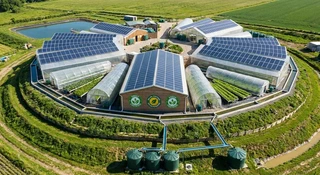
UN Sustainable Development Goals and Agriculture
In 2015, the United Nations established 17 Sustainable Development Goals (SDGs) approved by 193 countries. These goals, targeted for 2030, cover a wide range from ending poverty to combating climate change, from reducing inequality to clean energy.
The agricultural sector is central to these goals. Because:
- 26% of the world’s population makes a living from agriculture (2 billion people)
- 70% of global freshwater use is in agriculture
- 24% of greenhouse gas emissions come from agriculture and land use
- Food security is a fundamental right for 8 billion people
Traditional agriculture is insufficient to achieve these goals. Hydroponic agriculture, on the other hand, directly contributes to 6 SDG goals by combining technology and sustainability.
SDG 2: Zero Hunger
Goal: End hunger, achieve food security, improve nutrition, and promote sustainable agriculture by 2030.
Current Status: Food Crisis
- 828 million people are hungry (10% of world population)
- 2.3 billion people (29.3% of population) experience moderate or severe food insecurity
- 149 million children (under 5) suffer from growth retardation (malnutrition)
Hydroponic Solution: Space Efficiency
1 Hectare Open Farming vs. Hydroponics Comparison (Lettuce):
| Metric | Open Farming | Hydroponics | Multiplier |
|---|---|---|---|
| Annual Production (tons) | 30-40 tons | 300-400 tons | 10x |
| Water Consumption (m³) | 15,000 m³ | 600 m³ | 96% less |
| Labor (hours) | 800 hours | 400 hours | 50% less |
| Pesticide Use | 20-30 kg | 0 kg | Zero |
Real Impact: 10 hectares of hydroponics can produce the equivalent of 100 hectares of open fields. This allows the remaining 90 hectares to be converted to food forestry, livestock, or natural habitat.
SDG 6: Clean Water and Sanitation
Goal: Ensure sustainable management of water and sanitation for all.
Global Water Crisis
- 2 billion people live in water-stressed regions
- Turkey: 1,346 m³ of water per capita annually (water scarcity threshold: 1,700 m³)
- Forecast: By 2030, 11 of Turkey’s basins will be water-stressed (currently 5 basins)
Hydroponic Water Efficiency
90% Water Savings How?
- Closed-Loop System: Water circulates in nutrient tank - doesn’t leak to environment, doesn’t evaporate
- Precise Dosing: Plant receives exactly the water it needs
- Evaporation Control: Closed environment humidity 60-70%, outdoor 30-40%
- Reuse: Unused water is filtered and recirculated
Real Data Example (1,000 m² Hydroponic Lettuce Production):
- Annual Water Consumption: 60 m³ (60,000 liters)
- Same Production in Open Farming: 750 m³ (750,000 liters)
- Savings: 690 m³ = 11.5 people’s annual drinking water needs
SDG 12: Responsible Production and Consumption
Goal: Ensure sustainable consumption and production patterns.
Food Waste Crisis
- 1.3 billion tons of food is wasted annually (30% of food produced)
- Monetary Value: 1 trillion USD
- Carbon Footprint: 3.3 billion tons CO₂ equivalent
Hydroponic Waste Reduction
1. Zero Field Loss: Controlled production → 100% standard product 2. Long Shelf Life: Hydroponic lettuce: 10-14 days vs. open farming: 3-5 days 3. Short Supply Chain: Urban production → 2-12 hour transport 4. Demand-Production Alignment: Harvest after order (no stock)
SDG 13: Climate Action
Goal: Take urgent action to combat climate change and its impacts.
Agriculture’s Climate Footprint
- Agriculture and Land Use: 24% (13.6 billion tons CO₂e)
Hydroponic Carbon Footprint Reduction
Total Carbon Footprint Comparison (1 ton lettuce):
- Open Farming: 450 kg CO₂e
- Heated Greenhouse: 650 kg CO₂e
- Hydroponics (urban, LED, partial solar): 120 kg CO₂e
- Reduction: 73%
SDG 11: Sustainable Cities and Communities
Goal: Make cities safe, resilient, and sustainable.
Green City: Hydroponic Integration
Rooftop Farming:
- Istanbul has 500 km² of rooftop area
- If 1% used for hydroponics → 50,000 tons/year vegetables
Vertical Farms:
- Unused factory buildings → food production centers
- Scenario Example: A 2,500 m² old textile factory → 80 tons/year hydroponic lettuce
SDG 7: Affordable and Clean Energy
Goal: Ensure access to affordable, reliable, sustainable, and modern energy for all.
Energy Optimization
LED Technology: 70% energy savings vs. old HPS lamps Solar Integration: 30-60% of facility needs met Waste Heat Recovery: 20-25% energy savings
SDG 8: Decent Work and Economic Growth
Goal: Promote sustained, inclusive, and sustainable economic growth, full and productive employment, and decent work for all.
Job Creation
- 1,000 m² facility = 5-8 full-time employment
- Women’s Employment: 60% of hydroponic workers are women
- Youth Employment: Technology + agriculture intersection (high millennials/Gen-Z interest)
Conclusion: Hydroponic Contribution to 2030 Goals
Hydroponics is not just a production method, it’s a tool for sustainable development. Direct contribution to 6 SDG goals:
| SDG | Hydroponic Contribution | Measurable Impact |
|---|---|---|
| SDG 2 (Hunger) | 10x space efficiency | 1 hectare → 10 hectare equivalent production |
| SDG 6 (Water) | 95% water savings | 1,000 m² → 690 m³ water savings/year |
| SDG 7 (Energy) | Solar + LED optimization | 30-60% renewable energy share |
| SDG 11 (Cities) | Urban production | 1% of rooftops → 20% vegetable needs |
| SDG 12 (Responsible Consumption) | 50% waste reduction | Supermarket waste 18% → 6% |
| SDG 13 (Climate) | 73% carbon reduction | 1 ton product → 330 kg CO₂ savings |
2030 is 5 years away. Traditional agriculture is not enough to achieve these goals. New technologies, new methods are needed. Hydroponic agriculture is a pioneer of this transformation.
Sustainability means leaving a livable world to future generations. Hydroponic agriculture is a concrete way to fulfill this promise.
Technoponic and SDG Commitment: We track SDG metrics in all our projects and provide annual sustainability reports to our customers. Let’s work together for 2030 goals: info@technoponic.com
