Why Do Industrial Enterprises Pay Carbon Taxes?
Your production processes cause carbon emissions. Due to increasing environmental regulations in the European Union and Turkey, additional taxes and sanctions are being imposed.
Real Example: Cement Industry
- $100 cement production** -- **$65 carbon tax
- Total cost: $165
- Loss of competitiveness, export difficulties
Similar Situations:
- Packaging manufacturers: Additional tax burden
- Textiles: Water consumption + carbon emissions
- Chemicals: Heavy carbon production
- Heavy industry: Similar regulations across all sectors
Technoponic Solution: Dual Benefit
1. FOOD PRODUCTION – REVENUE
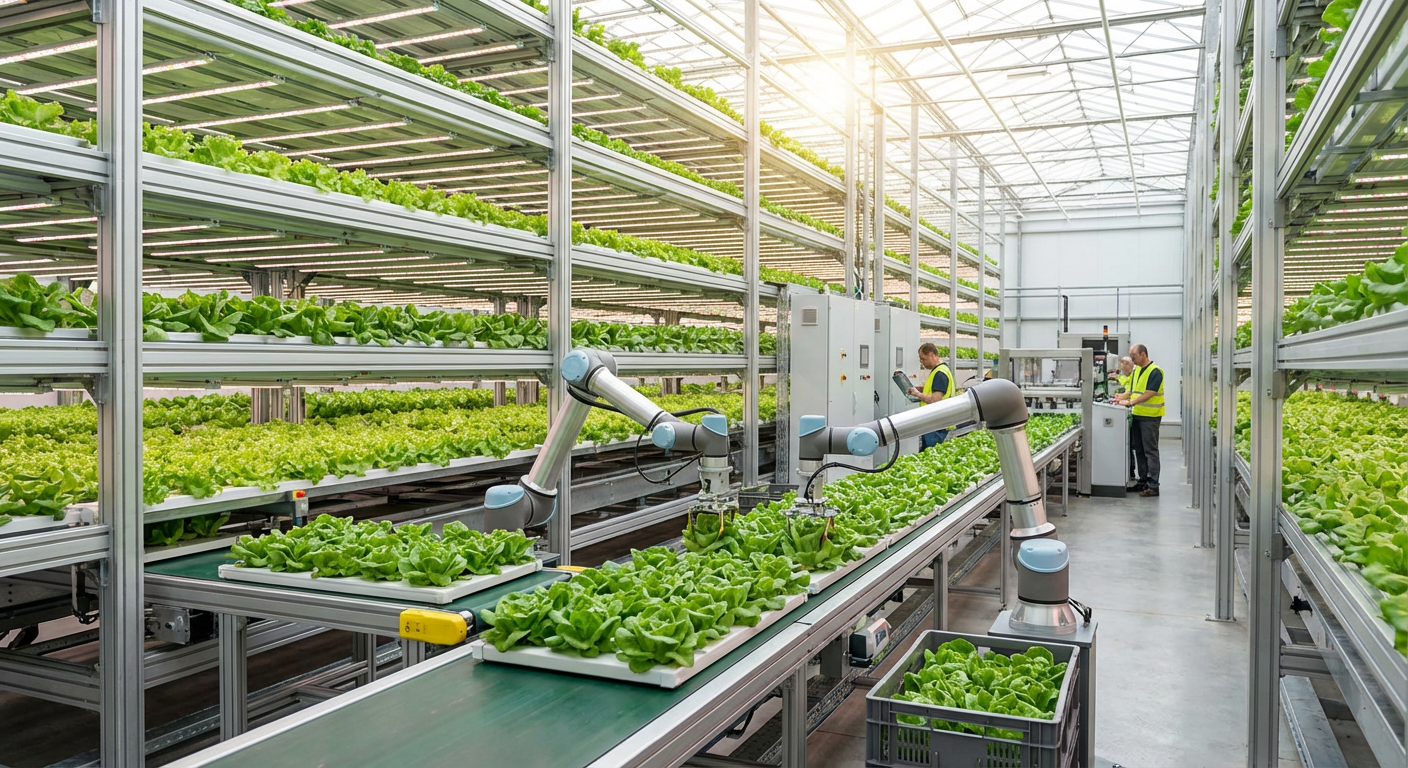
- Establish a hydroponic facility for pesticide-free food production
- Regular annual income
- Return on investment in 5 years
- Additional business line
2. CARBON REDUCTION – TAX SAVINGS
- Every kg of green plants = X kg CO2 absorption
- Prove that you are reducing your carbon footprint
- Exemption or discount from carbon taxes
- Credit advantages (sustainability loans)
- ESG reporting (a plus for investors)
Financial Impact
| Scenario | Annual Cost | After Technoponic |
|---|---|---|
| Cement Company | 100M production + 65M carbon tax = 165M | 165M – 120M (45M savings) + 30M revenue = 75M net benefit |
| Packaging Manufacturer | 50M production + 20M surcharge = 70M | 70M – 55M + 15M revenue = 30M net benefit |
| Textiles | 200M production + 80M sanctions = 280M | 280M – 220M + 50M revenue = 110M net benefit |
Note: Figures are for illustration purposes. We can provide custom calculations for your company.
Which Industries Is It Suitable For?
Cement
Heaviest carbon tax burden
- $100 -- $165 cost
- Solution: KOBUS on facility rooftop or adjacent land
Packaging
Plastic and cardboard production
- Additional environmental obligations
- Green packaging trend
Textiles
Water + carbon issues
- Dyeing, fabric processing
- Risk of relocating facilities abroad
Chemicals
Heavy carbon producer
- Sustainability requirements
- Adapting to green chemistry trend
Automotive
Supply chain pressure
- OEM ESG demands
- Carbon-neutral production targets
Energy
Fossil fuel usage
- Green energy transition
- Offsetting needs
1. Measurement and Reporting
Current State Analysis
- Your company’s carbon footprint is calculated
- Comparison with industry standards
- Required reduction amount is determined
Technoponic Facility Impact
- KOBUS facility absorbs Y tons of CO2 annually
- Plants capture carbon through photosynthesis
- Local production = reduced transportation-related carbon
Reporting
- Monthly carbon report (Denomas software)
- Third-party verification (optional)
- Documentation suitable for government submission
2. Sustainability Certifications
ISO 14001 (Environmental Management)
- KOBUS facility = environmental management system
- Certification support
Carbon Neutral / Net Zero
- Contribution to carbon-neutral targets
- Offsetting documentation
ESG Reporting
- Environmental: Carbon reduction
- Social: Local employment, food security
- Governance: Transparent reporting
3. Green Building / Facility Certification
LEED Certification
- Your facilities earn LEED points
- KOBUS = green space, local food production
- Employee satisfaction (fresh food)
BREEAM
- European standards
- Sustainable building certification
4. Legal Compliance
EU Carbon Border Adjustment Mechanism (CBAM)
- From 2026, carbon declaration mandatory for exports to the EU
- High carbon = additional tax
- Solution: Carbon reduction documentation
Turkish Environmental Law
- Increasing environmental obligations
- Emission limits
- Solution: Carbon offsetting
Special Financing Advantages
EU Sustainability Funds
- Green transition projects
- Grant opportunities
- Low-interest loans
Green Bonds
- Green Bond issuance credit
- Investor interest (ESG-focused)
- Low-cost financing
Sustainability Loans
- World Bank, EBRD
- Special interest rate discounts
- Long-term maturity
Development Bank Incentives
- Industrial transformation support
- SME incentives
- Regional development
Tax Deductions
- Environmental investment tax advantages
- R&D deduction (KOBUS = R&D)
- Customs exemption
Corporate Credit Rating
- ESG performance – credit rating increase
- Better loan conditions
- Investor confidence
Scenario 1: Facility Rooftop / Adjacent Land
Suitable For:
- Factories with large roof areas
- Facilities with adjacent land
Advantages:
- Utilizing existing space
- Waste heat integration (factory heat – KOBUS heating)
- Fresh food for employees (cafeteria)
- Visual impact (green facility image)
Example:
- 5,000 m² rooftop – KOBUS facility
- Annual revenue ~85M TL
- Carbon reduction: ~500 tons CO2/year
- ROI: 4-5 years
Scenario 2: Independent Facility (Company Investment)
Suitable For:
- Large industrial enterprises
- Holding companies
Structure:
- Separate company establishment (subsidiary)
- Operates as KOBUS facility
- Carbon reduction certificate for parent company
- Commercial revenue (food sales)
Example:
- 10,000 m² independent facility
- Annual revenue ~160M TL
- Carbon reduction: ~1,000 tons CO2/year
- Carbon certificate for parent company
- ROI: 4 years
Scenario 3: Partnership Model
Suitable For:
- Multiple industrial enterprises coming together
- Organized Industrial Zones (OIZ)
Structure:
- Cooperative or company
- Partners receive carbon certificates
- Profit sharing
- Risk sharing
Example:
- 5-company partnership
- 8,000 m² facility
- Each partner: carbon certificate + revenue share
- ROI: 5 years
Scenario 4: Build-Operate-Transfer (BOT)
Suitable For:
- Companies that do not want to operate
- Those who only want carbon certificates
Structure:
- Technoponic builds and operates the facility
- Company leases the land (or partners)
- Company receives carbon certificate
- Facility is transferred to the company after 10 years
Advantages:
- Zero operational burden
- Carbon certificate only
- Ownership after 10 years
Cement Manufacturer - 45M TL Annual Savings
Problem:
- Annual production: 100M TL
- Carbon tax: 65M TL
- Total: 165M TL
Solution:
- 6,000 m² KOBUS facility (rooftop + adjacent area)
- Annual revenue: 30M TL (food sales)
- Carbon reduction: 45M TL tax discount
Result:
- 75M TL net benefit (30M revenue + 45M savings)
- ROI: 3.5 years
- Increased competitiveness in EU exports
Textile Company - Canceled Facility Relocation
Problem:
- Additional sanctions due to water consumption + carbon
- Plan to relocate facility to Bangladesh
- Employment loss risk
Solution:
- 4,000 m² KOBUS facility
- Carbon offsetting certificate
- Sustainability report
Result:
- Facility relocation canceled
- 200 jobs preserved
- Green textile branding
- Increased satisfaction from European customers
Packaging Manufacturer - Issued Green Bonds
Problem:
- Image problem due to plastic packaging
- High financing costs
Solution:
- 3,000 m² KOBUS investment
- ESG report strengthened
- Issued Green Bonds
Result:
- 50M TL green bond (low interest)
- Investor interest tripled
- Brand value increased
How is carbon reduction measured?
Monthly carbon calculations are performed using Denomas software. The amount of CO2 captured by plants through photosynthesis + reduction in transportation-related carbon from local production is calculated. Third-party verification is also available.
Which authorities accept the carbon certificate?
- Ministry of Environment
- Ministry of Industry
- EU Customs (for CBAM)
- Independent audit firms
- Investors (ESG reporting)
Is land required to build a facility?
Yes, minimum 1,000 m². Alternatives:
- Factory rooftop
- Adjacent land
- Above parking lot
- Leased land
Who operates the facility?
Three options:
- You operate it (personnel + training)
- Technoponic operates it (contracted)
- BOT model (we build and operate, transfer after 10 years)
Is there a tax reduction guarantee?
Tax matters depend on legal regulations. However:
- Carbon reduction is documented
- Environmental investment provides tax advantages
- ESG reporting provides credit advantages
- We work with legal advisors
What products can be grown?
105+ products. Based on your preference:
- For employee cafeteria (lettuce, tomatoes)
- For commercial sales (medicinal aromatics)
- Both
Let us calculate a custom carbon reduction and revenue model for your company.
or
Direct Contact:
- Email: info@technoponic.com
- Phone: +90 542 611 91 20
- Address: Egitim Mahallesi Adim Sokak No:13-15B Kadikoy Istanbul